



Local SEO for Contractors Starts With Qualified Project Leads
Local SEO for contractors should connect the services you want to sell with homeowners you can actually help. For a remodeling company, that means appearing for relevant local searches, showing evidence of similar completed work and making it easy to request the right consultation. Rankings and website traffic help you understand visibility. Qualified leads, consultations and signed projects tell you whether that visibility supports the business.
A homeowner planning a kitchen renovation has different questions from someone seeking an emergency repair. Your contractor website should explain the project types you take on, the areas you serve, your process and what happens after an inquiry. This guide shows how to build that connection without treating every visit as a sales opportunity.
A useful consultation connects the homeowner’s project, expectations and next decisions.
The Benefits of SEO for a Remodeling Contracting Business
Local search engine optimization helps a local business make its services, location and supporting evidence discoverable. For home service contractors, that includes Google Maps and ordinary website search results. Effective local SEO connects those appearances with a clear route to a real conversation.
SEO for general contractors and remodeling companies should reflect the work each business wants. A remodel may begin with weeks of project research; the website can support that research with useful service information and completed-project proof. The benefits of SEO include relevant discovery and a clearer customer journey. Measure whether those changes help your business attract suitable inquiries, rather than assuming visibility equals revenue.
Define a Qualified Remodeling Lead Before Choosing SEO Keywords
Start with a written definition that your estimator, office team and marketing partner can use. A qualified lead is a real inquiry that fits your services and has enough information for a useful next conversation. It is not simply a call-button click or a submitted contact form.
Agree on five practical checks:
- Project type: kitchen, bathroom, whole-home remodeling, an addition or another service you genuinely provide.
- Location: a property within the area your team can serve profitably and reliably.
- Scope: a project suited to your skills, crew capacity and delivery model.
- Investment expectations: a realistic discussion about scope and budget, with room for owners who are still learning what their project involves.
- Timing and decision stage: whether the homeowner is researching, preparing a design or ready to discuss a proposal.
Record why an inquiry did not fit. If a design-build remodeler repeatedly receives requests for small handyman jobs, the problem may be the service language, the searches being targeted or the way the website describes its work. That is more useful information than a report celebrating a larger number of leads.
Find the Break in Your Local Search-to-Lead Process
Before changing everything, follow one important service from search to inquiry. Look at the public Google Business Profile, the page a homeowner lands on, the evidence they can review and the contact route. Test the form and phone link yourself. Confirm that the office receives the message and can identify the service requested.
| What you observe | What to investigate first | Evidence to keep |
|---|---|---|
| Few appearances for relevant local searches | Profile status, website indexing, service relevance and local competition | Search Console queries, indexed service pages and dated local search checks |
| Visitors arrive, but their projects do not fit | Keyword intent, service descriptions, service areas and project examples | Landing pages and the reasons inquiries were unsuitable |
| Suitable visitors do not contact the business | Project proof, unclear next steps and broken or difficult contact paths | Mobile form tests, call-link checks and available website analytics |
| Qualified inquiries do not become consultations | Response ownership, follow-up and how the next meeting is explained | Inquiry records, contact attempts and completed consultation outcomes |
A small sample can point to a useful investigation. It does not establish a cause by itself. Keep the observed symptom, the change you make and the result you will check together.
Local SEO Keyword Research for Remodeling Contractors
Local keywords should connect homeowner language with a service you can deliver. Separate searches for a contractor from searches for design inspiration, project costs and how a renovation works. All can be useful, but they need different pages and different expectations. Look at the local market you serve and the specific services you want local customers to find.
Match service searches with dedicated contractor pages
A San Diego remodeling company might investigate phrases such as “kitchen remodeling San Diego,” “bathroom remodeling contractor” and “whole-home renovation company.” These are examples of service intent, not a claim about their search volumes or the company’s current rankings. Validate actual demand and competing results before choosing targets.
Give each major service a useful page. A kitchen remodeling page should answer kitchen-specific questions. A bathroom remodeling page should explain bathroom work. A general contractor page should describe the broader work the business actually undertakes. Avoid using one vague “we do everything” page as the destination for every search.
Connect research questions with the next relevant service
A homeowner asking about a kitchen renovation process may still be deciding whether to hire. Explain the sequence, decisions and constraints, then link naturally to the kitchen service page and relevant projects. Content about unrelated decorating ideas may attract readers who have little reason to contact a remodeling company.
Before you create content for a contractor SEO strategy, write down the intended reader, the service it supports and the next useful action. That keeps a contractor SEO strategy connected to the sales process. Search volume alone cannot tell you whether a topic will produce qualified remodeling leads.
Optimize Your Google Business Profile for the Business You Run
Your Google Business Profile is an important local discovery surface. The profile was formerly called Google My Business. Start with accurate business information, the correct website and phone number, a category that represents your main work and the verification status shown in your account. Google describes local results in terms of relevance, distance and prominence. See its local ranking guidance before accepting a promise that a particular edit will guarantee a Maps position.
Use accurate categories, services and contact information
Choose the most specific appropriate primary category available for your core business. Additional categories should describe real activities. List your actual remodeling services and keep the business name consistent with how the company is represented in the real world. Google’s business representation guidelines cover names, categories and location eligibility.
Keep your business hours and contact routes current. A profile that sends a homeowner to an outdated number or the wrong service page creates a problem even when it appears in search. Check the website destination on a phone and make sure the page explains the next step.
Set service areas without inventing locations
If customers do not visit your business address, use the service-area setup that matches how your company operates. Google’s service-area guidance explains the distinction between service-area and hybrid businesses. Do not create a profile for every town unless a location independently meets the relevant eligibility rules.
Describe towns you truly serve. Adding a town to a profile is not a guarantee that the business will rank throughout that town. Review visibility for the services and areas that matter, keeping the check date and search location with the results. One search from one device is a limited observation.
On-Page SEO for Contractors: Service Pages That Help Homeowners Choose
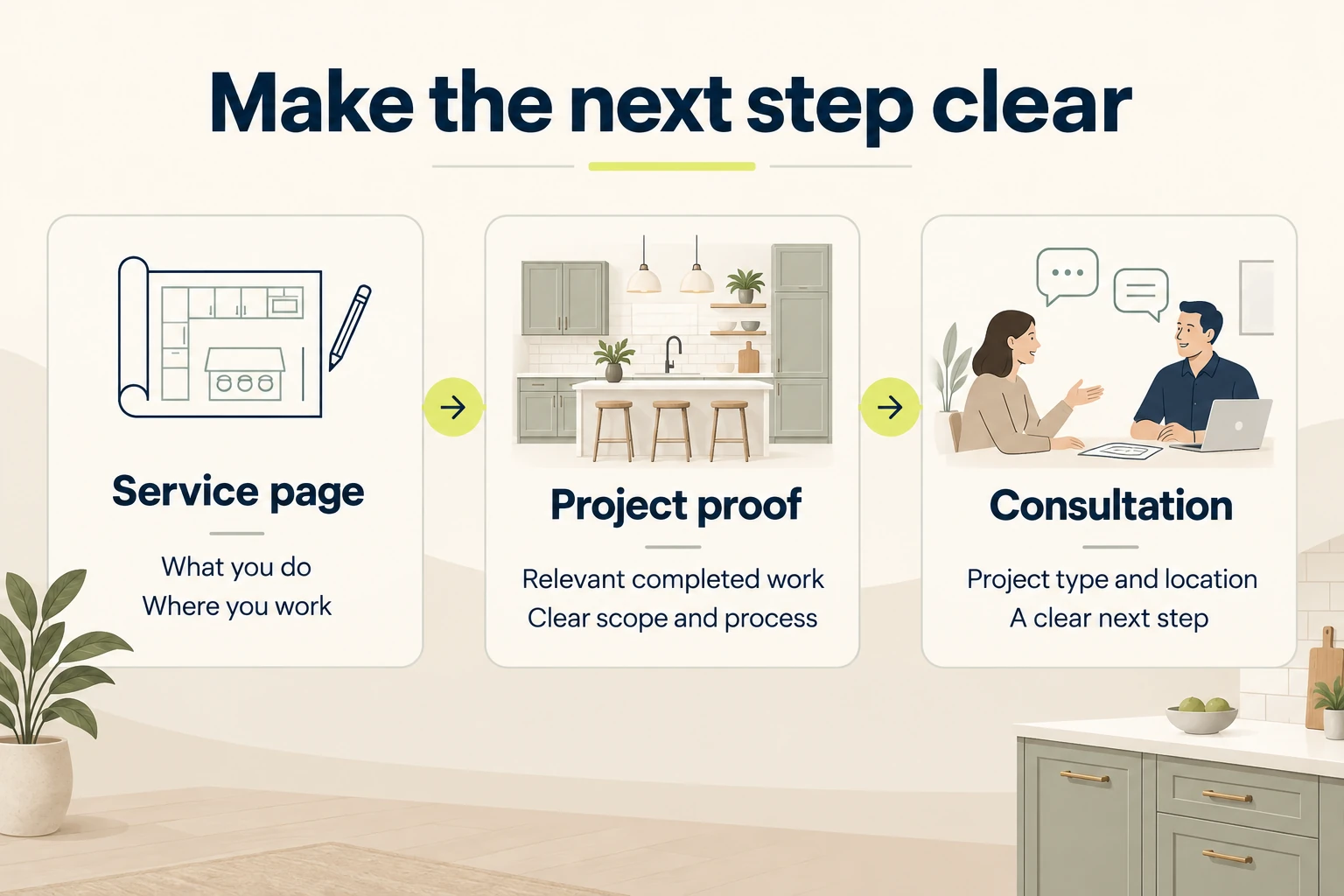
A remodeling service page has two jobs: explain what the business offers and help a suitable homeowner decide whether to contact it. Start with the project, not a long list of SEO keywords. Use a descriptive page title and main heading, clear sections and internal links to relevant work.
A useful kitchen or bathroom service page should include:
- The types of work you take on and meaningful limits on your scope.
- The places you serve and how the first consultation works.
- Relevant completed projects, with permissioned photographs and accurate descriptions.
- Your design, estimating and construction process at a level homeowners can understand.
- Verified licensing, insurance and team information where appropriate.
- Factors that influence the project’s investment and schedule, without inventing a universal price.
- A clear inquiry action and an explanation of what happens next.
If the company offers design-build work, explain who handles design, selections, estimating and construction. If it only handles construction, make that distinction clear. These details help a visitor identify a fit and give the office a better starting conversation.
Avoid promises about a homeowner’s exact permit outcome, price or completion date before assessing the project. Useful qualification comes from honest scope information, not a collection of impressive claims.
Use Project Pages as Evidence, Not Just a Photo Gallery
Project photographs can show style and workmanship, but a useful project page also explains the work. Organize completed projects by service so a homeowner considering a bathroom can find relevant bathroom examples. Link the project back to the matching service and the next consultation step.
For each publishable project, describe the homeowner’s goal, the general location, the original constraints, the work completed and the choices that mattered. Use details you can verify. A short explanation of how a kitchen layout changed is more useful than a gallery with filenames and no context.
Protect customer privacy. Use a general area instead of a precise residential address unless publication is specifically approved. Get permission for photographs and testimonials. Do not present a generated room image as a photograph of a completed client project.
What TeamSoda’s remodeling work demonstrates
TeamSoda’s published case-study collection includes Creative Design & Build, whose search coverage spans home remodeling, kitchens, bathrooms and hardscaping. The documented work includes service content, supporting articles, commercial pages and internal linking. That is a useful example of building visibility around several real services instead of relying on one broad homepage.
The published case documents search visibility. Qualified-inquiry and signed-project outcomes require separate lead and business records. Keep those measures distinct when evaluating your own campaign or a provider’s case study.
Make Location Pages Useful to the Areas You Actually Serve
Location pages can explain how a contractor serves a particular town, but they need a reason to exist beyond repeating a city name. Include relevant services, completed work in the area when available, practical coverage information and the consultation route.
Do not publish dozens of near-identical pages that funnel readers to the same destination. Google identifies pages created to rank for similar searches without useful distinct value as a potential doorway-abuse problem. A city page should help a homeowner understand your service there.
If you do not have enough useful information for an individual town page, start with a clear service-area page and improve the main service pages. Add a dedicated location page when you have a distinct, accurate contribution. Useful coverage is a better reason to expand than filling every possible keyword combination.
Local Citation and Link-Building Best Practices for Contractors
Check that the company’s name, contact information, website and business details are accurate across local directories and profiles homeowners genuinely use. Relevant local citations may include established business listings, trade organizations, suppliers or community organizations. Choose accurate, useful placements rather than buying bulk directory submissions.
When you partner with local organizations, look for legitimate link opportunities: a project feature with permission, a supplier partnership, a chamber profile or an actual community activity. Explain the relationship honestly. A contractor should not have to invent a sponsorship or buy a recommendation to fill a link-building report.
Ask customers for an honest review after a real experience, using a neutral invitation and a working review link. Give the same opportunity to customers with different opinions. Do not offer a reward for a rating or publish fabricated reviews. Google’s review guidance explains the permitted approach.
Reply to relevant feedback thoughtfully and keep private project details out of public responses. Reviews help homeowners assess the company; they do not replace service pages, project evidence or a functioning consultation process.
Technical SEO Strategies for Contractor Websites
Technical SEO makes your useful content accessible. Check that important pages return a working document, can be crawled and are intended to be indexed. Review blocked pages, accidental noindex instructions and the canonical URL with your developer. An intentional private or unfinished page should not be treated as an error simply because it is not indexed.
Use Search Console to inspect important URLs and see the queries that produce impressions. Make service and project pages reachable through relevant internal links. Keep page titles descriptive, use a clear main heading and describe images accurately. Structured data should represent the business and information actually visible on the page.
Test the website on a real phone. Large uncompressed project images, obstructive pop-ups and hard-to-use contact controls can make the experience difficult. These SEO best practices support a website for local search and a usable contact experience. Measure performance before prescribing a rebuild. The next fix may be an image-size change or a broken form, rather than a new website.
A speed score is a diagnostic, not evidence that a homeowner booked a consultation. Review the measured page experience alongside the inquiry path. Check that calls route correctly, forms save and deliver, confirmation messages are understandable and the office knows who responds.
Make Consultation Requests Clear and Useful
Give homeowners a way to describe the project without requiring a full design brief before they can contact you. A short form can ask for project type, general location, a brief description, preferred contact method and approximate timing. Request only information your team will use.
If budget is relevant, explain why you ask and allow a homeowner who is still researching to say so. Avoid presenting an unverified starting price solely to collect more submissions. Clarify the kind of work you accept and the next step in assessing scope.
Tell visitors whether the first conversation is an introductory call, a design consultation or another appointment. State any applicable consultation terms accurately. Set response expectations the business can meet, and assign an owner for new inquiries.
Use a visible call option and a clear form action such as “Discuss your remodeling project.” Connect the call or form to the service the visitor is reviewing. A generic contact page can work, but it should not require homeowners to guess what information to provide or whether they will hear back.
Measure Contractor SEO Success With Qualified Leads and Signed Projects
Connect SEO reporting with the records your office can verify. Review relevant non-branded searches and landing pages alongside actual inquiries. Separate submitted forms and call-button clicks from connected conversations, qualified projects, consultations that took place and work the business won.
A practical lead record can include source, landing page when available, requested service, general project area, fit status, next action and final outcome. Keep personal customer information in an appropriate private system, outside public reports and website analytics event names.
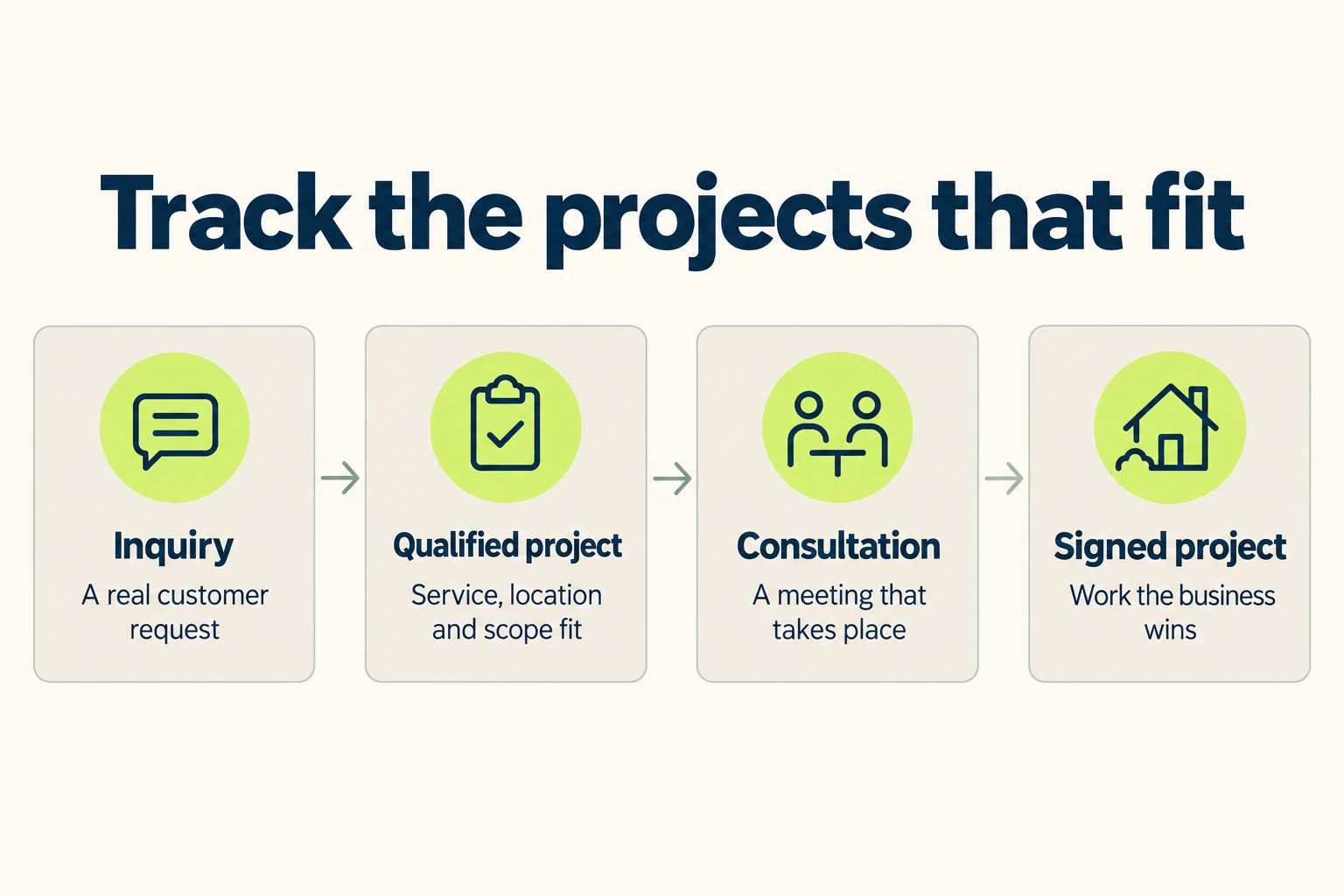
Calculate qualification and consultation rates only from comparable records. For example, a qualification rate uses assessed real inquiries as its denominator; a booked-project rate needs a clearly defined group and enough time for those projects to reach a decision. Do not divide contracts signed this month by unrelated new inquiries this month and assume you have measured conversion accurately.
Review your SEO efforts alongside reasons for poor fit or lost opportunities. A campaign bringing the right project requests may need better follow-up. A campaign attracting the wrong services needs a targeting or content review. This is how SEO reporting becomes a decision about the business rather than a list of positions.
Where AI Search, AEO and GEO Fit Into Contractor SEO
Remodeling companies may hear “answer engine optimization” (AEO), “generative engine optimization” (GEO) or “AI SEO.” Treat those labels as a prompt to assess another discovery channel, not a reason to neglect local search or the website’s inquiry process.
Google says its established SEO practices apply to AI Overviews and AI Mode, with no additional technical requirements or special optimization needed. Its AI-search guidance emphasizes accessible pages, useful content and accurate visible information. Keep service facts consistent and answer genuine homeowner questions clearly.
Track observed mentions and referrals where evidence is available. Being mentioned in an AI answer and winning a remodeling client are different events; connect attributable inquiries with the lead record before claiming a business outcome.
A Practical Local SEO Strategy for Contractors: Your First-Month Plan
Use the first month to establish a baseline and fix the clearest problems. This is a work plan, not a deadline for ranking or winning projects.
- Week one: define fit and check the inquiry path. Agree on qualified-lead criteria, review the Business Profile and test calls and forms. Save a baseline of important queries, pages and existing inquiries.
- Week two: improve one priority service page. Choose a service you want more of and can deliver. Clarify scope, service area, process, evidence and the consultation action.
- Week three: connect project proof and local information. Add or improve a permissioned project page, correct inaccurate listings and link relevant pages together. Prepare a neutral review invitation.
- Week four: review real inquiries and assign the next fix. Assess project fit, follow-up and the available search evidence. Record what changed and what you will check next.
Keep a small change log. It helps you understand which actions were completed and avoids attributing every movement in search or sales to the most recent edit.
Choosing an SEO Company for Contractors: What to Ask
SEO services for contractors can be useful when the company has a clear service focus but lacks the time or skills to connect keyword research, technical changes, local profiles, content and lead measurement. Define the SEO service you need before comparing packages. If a digital marketing agency also offers advertising or social media, ask how those marketing strategies connect to the same lead definition and how their results will be reported separately.
Contractors who want to grow their business should ask a provider to show relevant contractor experience, explain the first priorities for your website and identify what evidence would change the plan. Review who writes service content, who approves project facts, who handles website changes and how inquiries will be measured. A useful SEO report should distinguish completed work, observed search performance and verified business outcomes.
Compare scope rather than just the monthly number. One proposal may cover profile cleanup; another may include service pages, technical SEO, project content, local visibility checks and conversion reporting. Ask what is included, what requires your involvement and what remains outside the agreement.
TeamSoda’s home-services search work includes remodeling and contractor businesses. A website visibility review can provide a starting conversation about your important services, target areas and inquiry path. The goal is to identify a useful first action for your business.
Frequently Asked Questions About Local SEO for Contractors
Can a remodeling contractor use local SEO without a showroom?
Yes, when the business meets the applicable eligibility rules. Configure the Business Profile for how the business actually serves customers. A company that travels to homeowners and does not receive customers at its address should review Google’s service-area guidance rather than publish a fictional office.
Should every remodeling service have its own page?
Give materially different services enough space to explain their scope, process and evidence. Separate kitchen, bathroom and whole-home pages can help when those are real offerings. Do not create pages for services the business does not provide simply because a keyword tool suggests them.
Do more website visits mean more qualified remodeling leads?
No. Assess whether visitors need the services you offer and whether actual inquiries fit your location and scope. Use the lead record to connect discovery, qualification, consultations and signed projects.
Should we choose SEO or paid ads for contractor leads?
Choose based on your goals, capacity and measured outcomes. SEO and paid campaigns are different discovery routes, and both need clear service information and a working inquiry process. Separate their costs and sources when comparing qualified leads. Paying for an ad does not purchase a better organic local ranking.
How much should a remodeling company spend on local SEO?
There is no single appropriate budget. Compare the required scope, market competition, website condition and the work your team can handle. Ask providers for a clear proposal and judge the investment against qualified opportunities and business outcomes that can be verified.
Do contractors need a separate AI SEO campaign?
Start by identifying a real visibility gap and the platform involved. For Google’s AI search features, established SEO foundations remain relevant. Additional work should address a specific need, such as incorrect business information or weak answers to homeowner questions, with an agreed way to check the outcome.
Choose One Remodeling Service and Follow It Through to an Inquiry
Start with the work you want to win. Check how a homeowner finds that service, what evidence they see and how they request the next conversation. Improve the weakest point, then review the projects that actually reach your office.
If you want help connecting local search with suitable remodeling opportunities, request a TeamSoda visibility review. Share your website, the services you want to grow and the areas you serve so the discussion starts with your business.